
October 5, 2026
Why Failure Can Be One of Your Most Valuable Business Assets
Submitted by Bishwajit Barua, Growth Space Financial Solutions
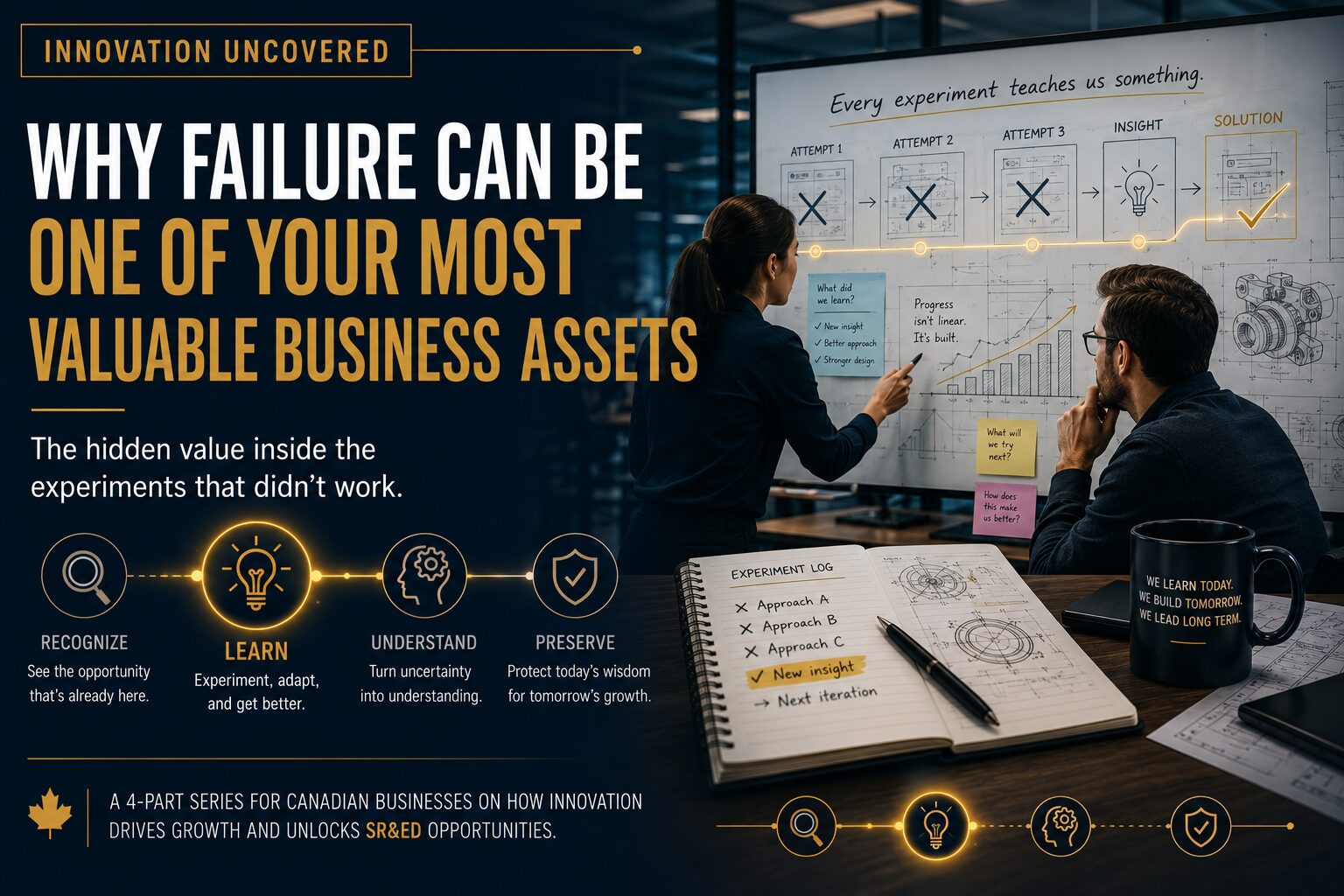
Most people remember outcomes more clearly than journeys.
We admire the finished building, the successful product launch, or the thriving business.
We rarely see the uncertainty, experimentation, and persistence that made those achievements possible.
That's human nature.
We naturally notice the result and overlook the process behind it.
I call this The Success Illusion™.
When we only see successful outcomes, we assume success happened smoothly. In reality, almost every business improvement has an invisible history of setbacks.
Sometimes the greatest value is created long before anyone recognizes it.
Recognizing innovation is only the beginning. Real progress comes from learning through experimentation.
Every Improvement Begins with Uncertainty
Imagine a software company whose platform begins slowing as more customers come online.
The team believes it has found the solution.
It doesn't.
A second approach creates a different problem.
A third improves performance but still falls short.
So, they continue testing, observing, adjusting, and learning until they finally develop a solution that works reliably. Customers see a faster platform.
The team remembers something different—the ideas that failed, the unexpected discoveries, and the lessons that made the final solution possible.
The success was visible.
The learning that created it was not.
Every Experiment Creates a Knowledge Asset
Businesses often evaluate projects with one question:
Did it work?
Innovation asks a different question:
What did we learn?
That simple shift changes how progress is measured.
Every thoughtful experiment leaves behind something valuable—a knowledge asset.
Each unsuccessful attempt removes uncertainty, improves understanding, and makes the next decision better.
This is The Learning Principle™:
Every thoughtful experiment leaves behind knowledge that makes the next decision better.
When organizations preserve those lessons, they continue creating value long after the original project ends.
Learning compounds.
Repeated mistakes do not.
Innovation Rarely Follows a Straight Line
This pattern appears across almost every industry.
- Manufacturers test different production methods before reducing defects.
- Engineering firms evaluate multiple designs before finding one that performs reliably.
- Restaurants redesign kitchen workflows after busy weekends expose hidden bottlenecks.
- Businesses implementing AI repeatedly refine prompts, workflows, and integrations before achieving dependable results.
Different industries.
The same pattern.
Observe.
Experiment.
Learn.
Adapt.
Repeat.
Most organizations simply call this problem-solving.
Yet this iterative process is often what innovation really looks like. It is also why the journey—not just the destination—can become important when evaluating potential Scientific Research & Experimental Development (SR&ED) opportunities.
The Cost of Forgetting
Imagine a team spends months discovering why several technical approaches don't work.
Nothing is documented.
A few years later, another team unknowingly repeats many of the same experiments.
The organization pays twice for the same lesson.
Progress compounds only when learning survives.
Looking at Progress Differently
Instead of asking,
Did we succeed?
Perhaps ask:
✓ What uncertainty did we reduce?
✓ What did we learn?
✓ What knowledge will improve our next decision?
✓ Are we preserving that lesson, so we never have to learn it again?
Organizations that consistently ask these questions don't simply solve today's problems.
They become better prepared for tomorrow's.
The Hidden Value Behind Every Success
Every successful innovation has an invisible history.
- A history of uncertainty.
- Experiments that didn't produce the expected result.
- Ideas that were abandoned.
- Lessons that quietly accumulated until progress finally became visible.
Businesses celebrate the finished solution.
But the greatest value was often created throughout the journey.
Sometimes what appears to be failure is simply progress that hasn't become visible yet.
The Opportunity Hidden Inside Unsuccessful Attempts
Businesses often assume unsuccessful attempts have little value because they didn't produce the intended result.
Ironically, the very work many businesses dismiss as "the part that didn't work" may be among the strongest indicators that SR&ED-eligible activities were occurring.
In other words, the learning journey itself may contribute to an eligible SR&ED claim.
A Living Question
What lesson has your business paid the most to learn—and are you make sure it never has to pay for it again?
Because some of the most valuable assets your business creates aren't found in its finished products.
They're found in the understanding every thoughtful experiment leaves behind.
Author: Bishwajit Barua, CPA is a tax accountant and financial strategist with more than 25 years of experience helping Canadian professionals, business owners, and incorporated individuals navigate taxation, financial planning, and long-term wealth-building decisions. As founder of Growth Space Financial Solutions, he is passionate about helping Canadians make informed financial decisions and fulfill his mission of Making Financial Stress Disappear™.
Member Blog
Want to share your story? Are you an expert in your area? Submit your blog today!
Please note: submission does not guarantee your blog will be posted.